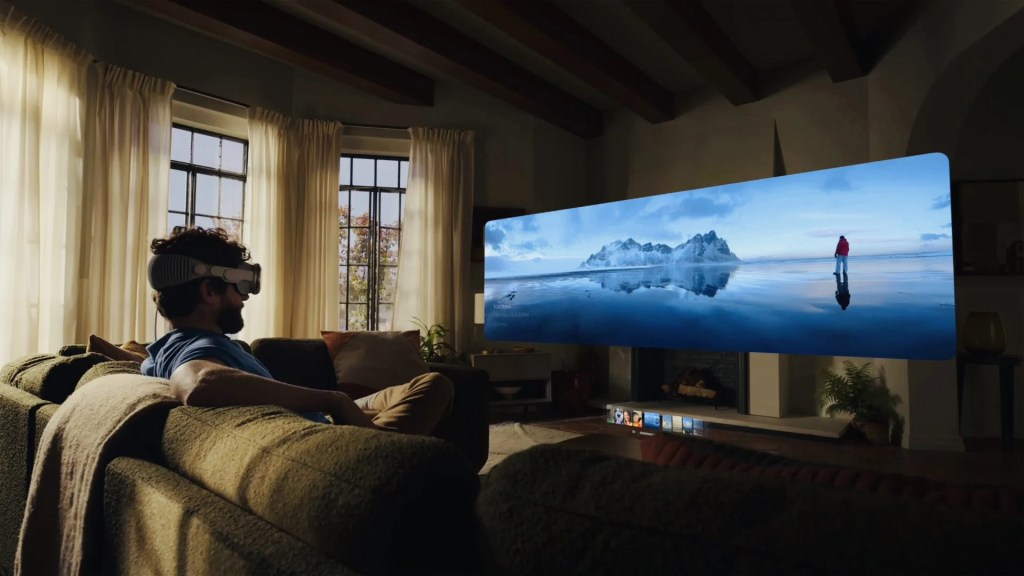
Apple has always been at the forefront of home video with Apple TV (the device), iTunes Movies, Spatial Audio, and the vivid displays of iPhones, iPads, and Mac displays.
With Apple Vision Pro, Apple is once again pushing the boundaries of the movie watching experience by supporting video formats that have never been available outside of movie theaters.
By creating a device that’s optimized for movie-watching and combining it with high-end video formats, Apple Vision Pro, despite its many flaws feels like a peek into the future of home video entertainment.
Groundbreaking new steps in home video formats
With the Vision Pro, Apple has introduced certain features that got the attention of the cinephiles, namely, High Frame Rate (HFR), 4k HDR 3D, and IMAX (1.43:1) format movie releases.
Why is this important? Because movies in these formats have never been available outside of the select few theaters that they played in.
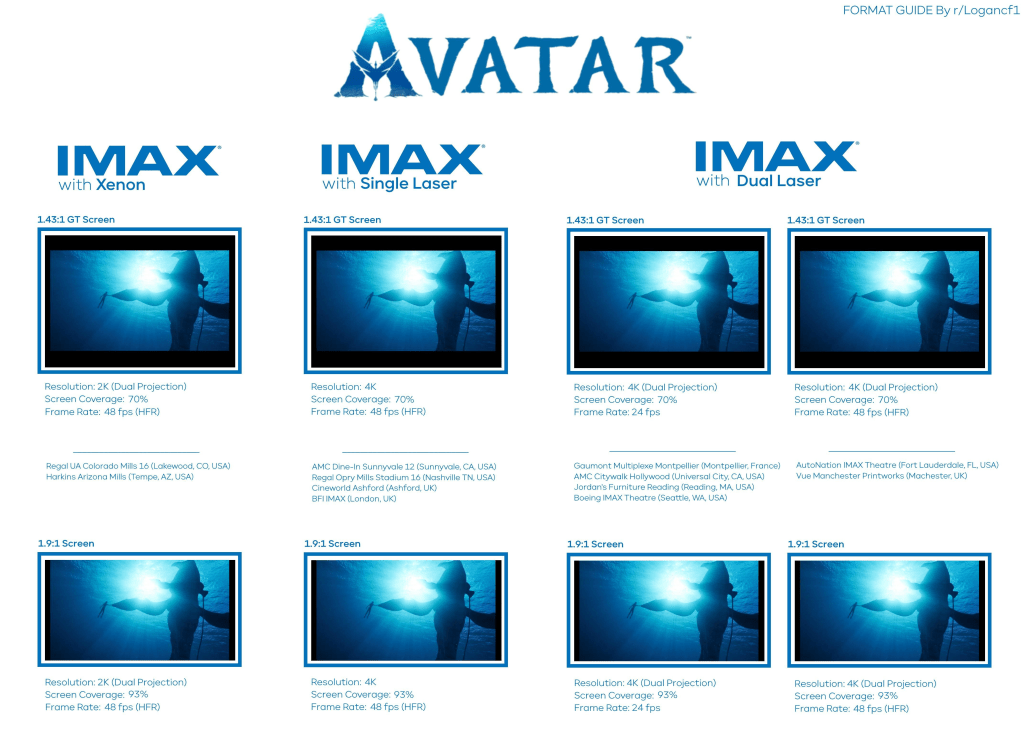
Take a movie like Avatar: The Way of Water-—There were more than 1065 different formats that the movie was presented in, depending on the theater and its projector (and language). There were 8 different formats just in IMAX alone! They all have various combinations of 2D vs 3D, 24fps vs 48fps, SDR vs HDR, 2k vs 4k.
Have fun doing the math on selecting which theater to go to to watch it in whichever format.
However, when it comes to home video, movie releases like Avatar get simplified to just 1.8:1 or 2.35:1 aspect ratio formats in SDR/HDR, sometimes in 3D (but not in 4k!), and never in HFR.
Much to my surprise, when Apple introduced the Vision Pro at WWDC ’23 with a core focus of the platform being “movie watching”, they announced that Avatar: The Way of Water would be available to be viewed in its native aspect ratio (1:85:1), in 4K, in stereoscopic 3D, in HDR, and High Frame Rate, my jaw was on the ground.
Just to put it into perspective, the “best” format of the movie you can currently get outside of Vision Pro is either 4K + HDR or just 2K + 3D. There is no way to watch the film in its native 3D format in 4K HDR because the file size of a 3D 4k movie does not fit on a standard Blu-Ray disk!
Apple Vision Pro is the only way to watch Avatar at home as it was intended to be seen.
High Frame Rate (HFR)
High Frame Rate is a controversial format that a select set of filmmakers continue to experiment with. While non-24 fps movie can sometimes detract from the cinematic experience with the “soap opera effect“, in my opinion, it significantly enhances the viewing experience for stereoscopic 3D movies by increasing comfort without the expense of the classic cinematic look.
There are only a handful of movies that have ever tried HFR. In terms of major Hollywood movies, I can boil it down to just:
- The Hobbit trilogy
- Billy Lynn’s Long Halftime Walk
- Gemini Man
- Avatar
- Avatar: The Way of Water
- Argylle
- Godzilla vs. Kong: The New Empire
To my knowledge, none of these films have been available in HFR outside of their theatrical releases—not on Blu-ray nor on streaming services (except for Billy Lynn but only in UHD Blu-Ray!).
However, with Apple Vision Pro, Disney announced that it will be offering select movies that were made with TruCut to be available in HFR on Apple Vision Pro exclusively. So far, the two films that are in HFR are Avatar and Avatar: The Way of Water. Billy Lynn is also available in HFR on Apple TV.
Stereoscopic 3D
Stereoscopic movies have a special place in VR headsets like Apple Vision Pro because are the perfect medium to actually watch 3D movies. Typically with 3D projectors and movies, you need to wear polarized or red/cyan glasses to see the image in 3D which comes at the expense of a degraded image. In VR, having separate video feeds for each eye comes for free, which means the image quality is optimal.
3D home video releases are technically not a new concept for as even certain older 3D movies, like It Came From Outer Space and Creature From the Black Lagoon were released on on VHS in anaglyph 3D. Since 2010, many 3D films were released in the frame-sequential 3D Blu-Ray format which offered a great step-up in visual quality when compared to anaglyph 3D.
However, the home video releases of 3D movies have not entered the 4K UDH nor HDR domain, so in essence, they’ve been stuck in the early 2010s.
With the Vision Pro, Apple has made significant strides in not only expanding the library of movies available in 3D, including titles that have never been available in this format outside of theaters (not even on Blu-Ray), but also offering certain 3D movies in 4K and HDR!
This means that, for the first time, certain movies are available technically in better quality on digital platforms than they are on physical media.
IMAX
“True” IMAX (meaning, 1.43:1 aspect ratio screens) is an incredibly immersive format that is yet again, only available in around 40 theaters globally. Its aspect ratio more tall and less wide that the typical 2.35:1 cinemascope aspect ratios that we’re used to with almost all movies.
Notoriously, 1.43:1 IMAX movies and documentaries are never released in their native aspect ratios for home video virtually everyone’s 16×9 TV’s are closer to the standard 2.35:1 aspect ratio than IMAX’s 1.43:1.
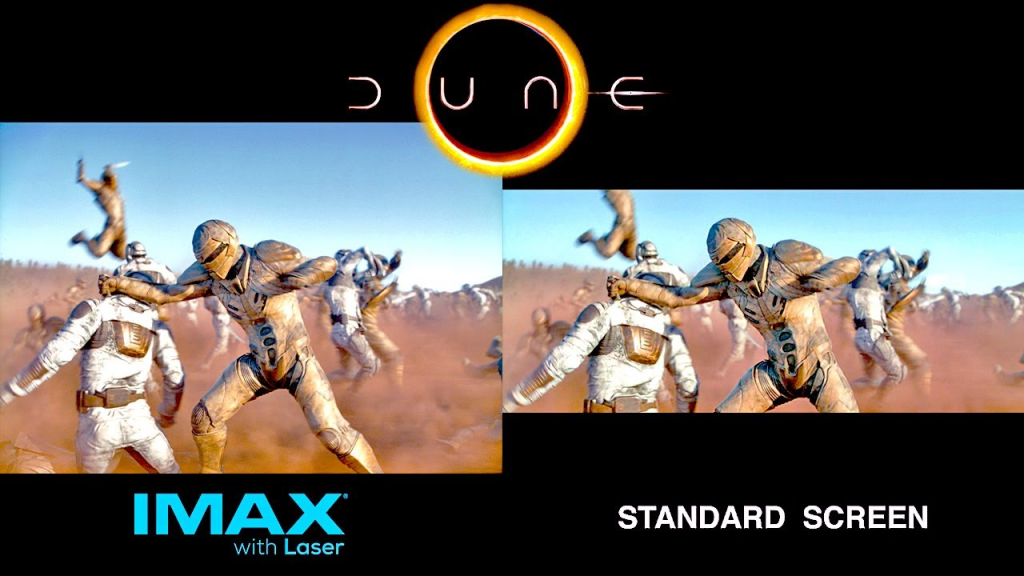
Once again, much to my surprise, IMAX is taking advantage of the fact in VR, screens can be any aspect ratio, not just what’s commercially viable to mass-produce.
IMAX has released a native Apple Vision Pro app and offers various IMAX documentaries in their native 1.43:1 aspect ratios, in 3D (when supported), and HDR.
Once again, this just demonstrates how VR can be an incredibly platform for movie watching, especially when the platform is designed and optimized for it as Apple Vision Pro has.
Apple’s obsession with offering “The Best”
It’s easy to forget that Apple has always prioritized offering top-notch photo, video, and music playback on its devices—Apple Vision Pro serves as a clear reminder that they’re very good at building devices that do that and that they can convince studios to go along with their wild plans.
While the first-gen Vision Pro is faaar from perfect (and tbh I wouldn’t recommend it for most people), it is a remarkable device for kicking back, watching movies, and playing games.
I do hope that it can be more than that in the future, but for now, it’s very good at those two things.
 Azad's Blog